Burlington MA Neighborhoods And Home Styles Overview
May 21, 2026
May 21, 2026
If you are trying to figure out where to focus your home search in Burlington, it helps to know that this town is not really about rigid neighborhood lines. Instead, Burlington is easier to understand by looking at broad residential patterns, the era when homes were built, and the kind of lifestyle each area tends to support. This overview will help you sort through Burlington’s main residential pockets, the home styles you are most likely to see, and what that means for your search. Let’s dive in.
Burlington sits about 12 miles northwest of Boston and has a housing pattern shaped by suburban growth. According to the town’s master plan, 71% of Burlington’s housing is classified as single-family, and 71% of the housing stock was built after 1960. That helps explain why so much of the town feels distinctly suburban.
The town’s history also matters here. Burlington was once a largely agricultural community, then changed quickly in the early 1960s as Route 128 development replaced farmland with new suburban neighborhoods and commercial growth. Today, the Census Bureau reports an owner-occupied housing rate of 74.6% and a median owner-occupied home value of $679,400 for 2019 through 2023.
One of the most important things to know is that Burlington is often discussed through local area names and residential pockets, not strict village-style borders. The town’s master plan includes neighborhood diagrams such as Fox Hill, Mill Pond Woods, and Winnmere, but many of these names work more like local shorthand than official boundary lines.
For most buyers, Burlington breaks down into three broad patterns:
If you start with those three buckets, your search usually becomes much easier to manage.
If you want classic detached-home suburbia, North Burlington and nearby areas like Fox Hill are often the first places to explore. These parts of town line up most closely with the traditional suburban layout many buyers picture when they think about Burlington.
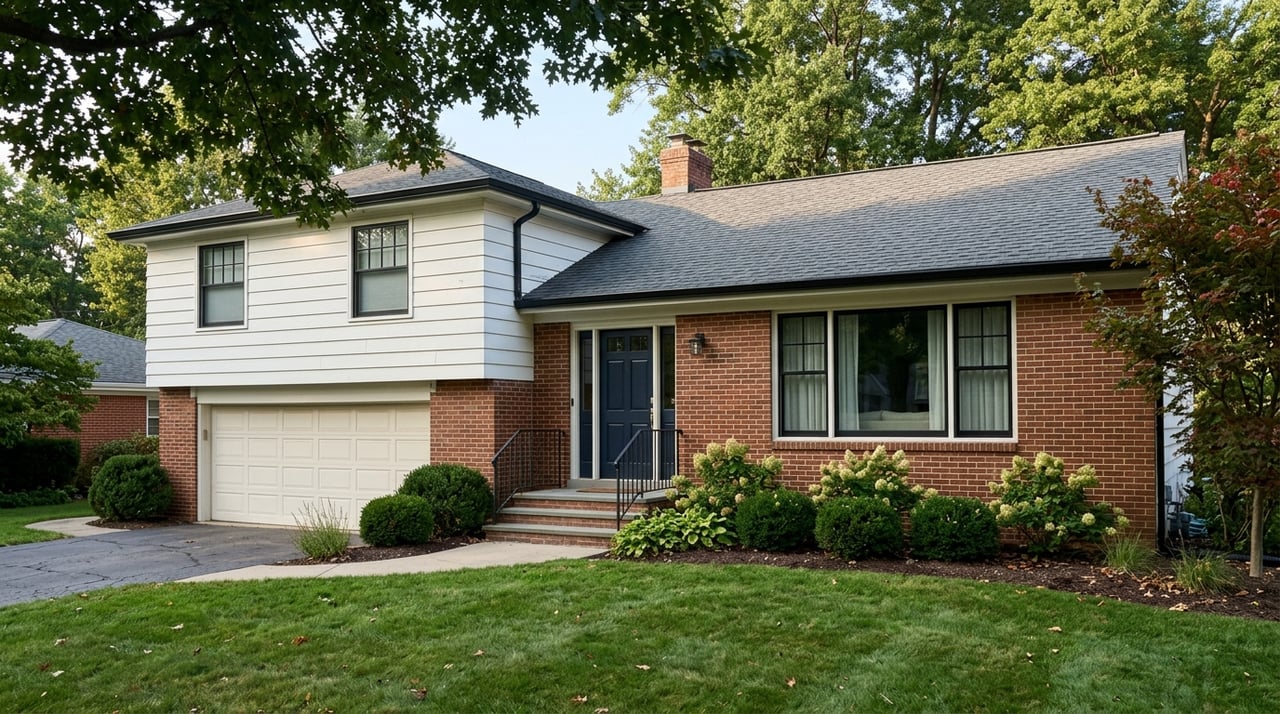
You will commonly find ranch-style homes, Cape Cods, colonials, split-levels, and some contemporary homes in these areas. Recent Fox Hill listings also reflect that mix, with ranch and colonial homes on larger lots near conservation land.
For buyers who care about outdoor access, Mill Pond adds another point of interest. Burlington’s conservation department identifies Mill Pond as the town’s largest and most visited conservation property, which helps explain why this side of town often appeals to buyers looking for a more established residential setting.
These areas may be a good fit if you are looking for:
Mill Pond is less about a separate official district and more about a recognizable residential pocket. From a home search perspective, it tends to fall into the same broad category as North Burlington and Fox Hill.
That means you will usually be looking at classic suburban single-family housing rather than newer attached developments. If your goal is a traditional house with yard space and a more residential street pattern, this area deserves a close look.
Burlington’s central and southern corridors offer a different feel. The town’s master plan notes that local stores and services cluster along Cambridge Street, especially near Cambridge and Winn Street, and that the Town Center Overlay was created to support a more pedestrian-oriented mix of residential and commercial uses.
This part of town is also where newer housing tends to be concentrated. The master plan says newer housing is generally located near Route 128, and Burlington’s Mall Road rezoning effort is designed to integrate residential uses into a changing commercial district.
For buyers, this usually means a stronger chance of finding condos, apartments, or townhome-style housing instead of the detached ranches and colonials more common farther north.
This area may be worth prioritizing if you want:
Winnmere is another recognizable Burlington pocket, located in the southwest part of town. It tends to attract buyers who want a traditional suburban setting with convenient access to major highways and the town center.
The housing here often reflects later suburban development, with many 1970s- and 1980s-era raised ranches, colonials, and similar New England suburban forms. If you like the idea of a residential neighborhood feel but also want practical commuting convenience, Winnmere is often part of the conversation.
Winnmere may appeal to you if you want:
Burlington’s housing stock makes more sense when you look at it by era. Broadly speaking, the town reflects two major periods: its earlier colonial-era roots and its post-Route 128 suburban expansion.
The Historical Commission notes Burlington’s colonial-era homes and barns, while the town’s later growth brought the styles many buyers now associate with suburban Burlington. As a result, the most common home types you are likely to see include:
In North Burlington, older homes often include Garrison Colonials, split-levels, hi-ranches, and Cape Cods, while newer homes are more likely to be traditional or contemporary in style. In central and Route 128-adjacent areas, attached housing becomes more common because multifamily development is concentrated more heavily in the southern part of town.
When you are comparing Burlington options, it helps to focus less on the name of a neighborhood and more on the kind of housing you want. In many cases, your best shortcut is to match your priorities to the part of town most likely to deliver them.
A simple way to think about it is this:
| If you want... | Start here... |
|---|---|
| Classic detached homes and larger lots | North Burlington, Mill Pond, Fox Hill |
| Newer or lower-maintenance attached housing | Town Center, Mall Road, Route 128 corridor |
| Traditional suburban feel with highway convenience | Winnmere |
That kind of framework can save you time and help you avoid touring homes in areas that do not match your goals.
A neighborhood overview is most useful when it gives you a practical filter. In Burlington, that filter is usually home type first, then location, then build era.
If you want a single-family home with a yard, your search will probably look very different from someone prioritizing a condo near newer mixed-use development. The more clearly you define that target upfront, the easier it becomes to spot the right opportunities and move quickly when a good fit hits the market.
Whether you are buying your first place, moving up, or narrowing down options between a condo and a house, understanding Burlington’s layout can help you search with more confidence. And if you want help sorting through which part of Burlington matches your goals, Kip LeBaron can guide you with practical advice and a clear, step-by-step approach.
Stay up to date on the latest real estate trends.

Partner with a top-producing Massachusetts Real Estate Agent known for market expertise, strategic guidance, and proven results. With over 200 homes sold and $118M+ in closed sales, Kip LeBaron delivers a seamless, full-service experience for buyers and sellers across Greater Boston, Middlesex County, and southern New Hampshire.